
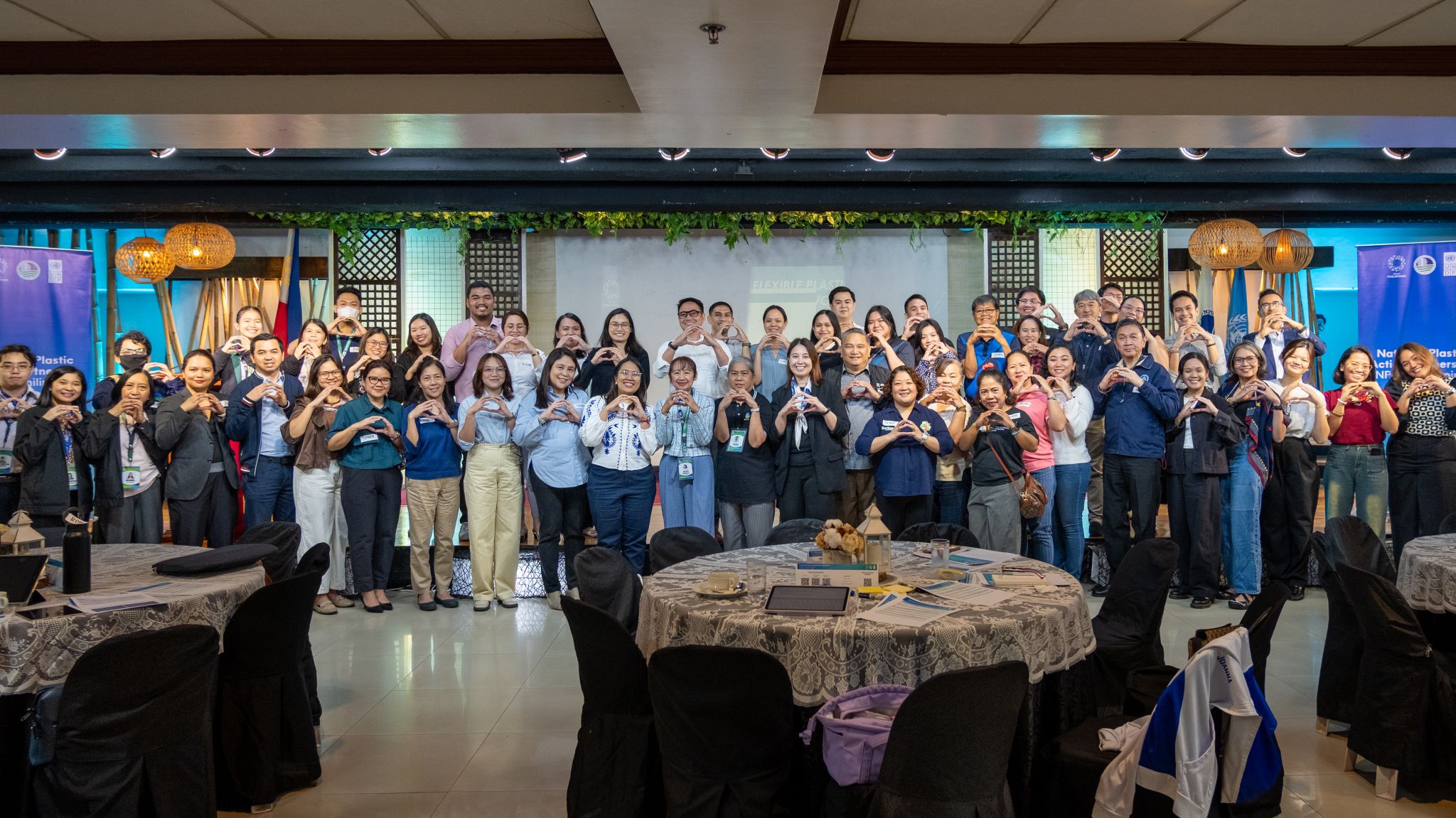
The Philippines generates approximately 2.7 million metric tons of plastic waste annually, with a significant share ending up in the ocean — placing the country among the top contributors to marine plastic pollution globally. The crisis is not only environmental. It threatens biodiversity, undermines livelihoods, and imposes mounting public health and economic costs on the communities least equipped to absorb them.
The country's Extended Producer Responsibility Act (RA 11898), passed in 2022, was a landmark response — obliging companies to recover and divert a portion of the plastic packaging they introduce to market, and shifting the cost of waste management toward the brands and producers that profit from it. But law alone cannot drive a systemic transition. What was needed was a platform that could translate national policy into collective action across government, industry, civil society, and communities.
The National Plastics Action Partnership (NPAP) Philippines was formally launched on 9 March 2025, led by DENR and hosted by UNDP, with backing from the World Economic Forum's Global Plastic Action Partnership (GPAP), and the Governments of the United Kingdom and Canada. Its mandate: to develop a comprehensive National Plastic Action Roadmap, foster multi-stakeholder collaboration, and guide the country's transition from a linear "take-make-waste" model to a circular economy by 2040.
KindMind was engaged as the facilitation and experience design partner across NPAP's working sessions — designing the processes through which diverse, often competing stakeholders could move from consultation to commitment, and from roadmap to reality.
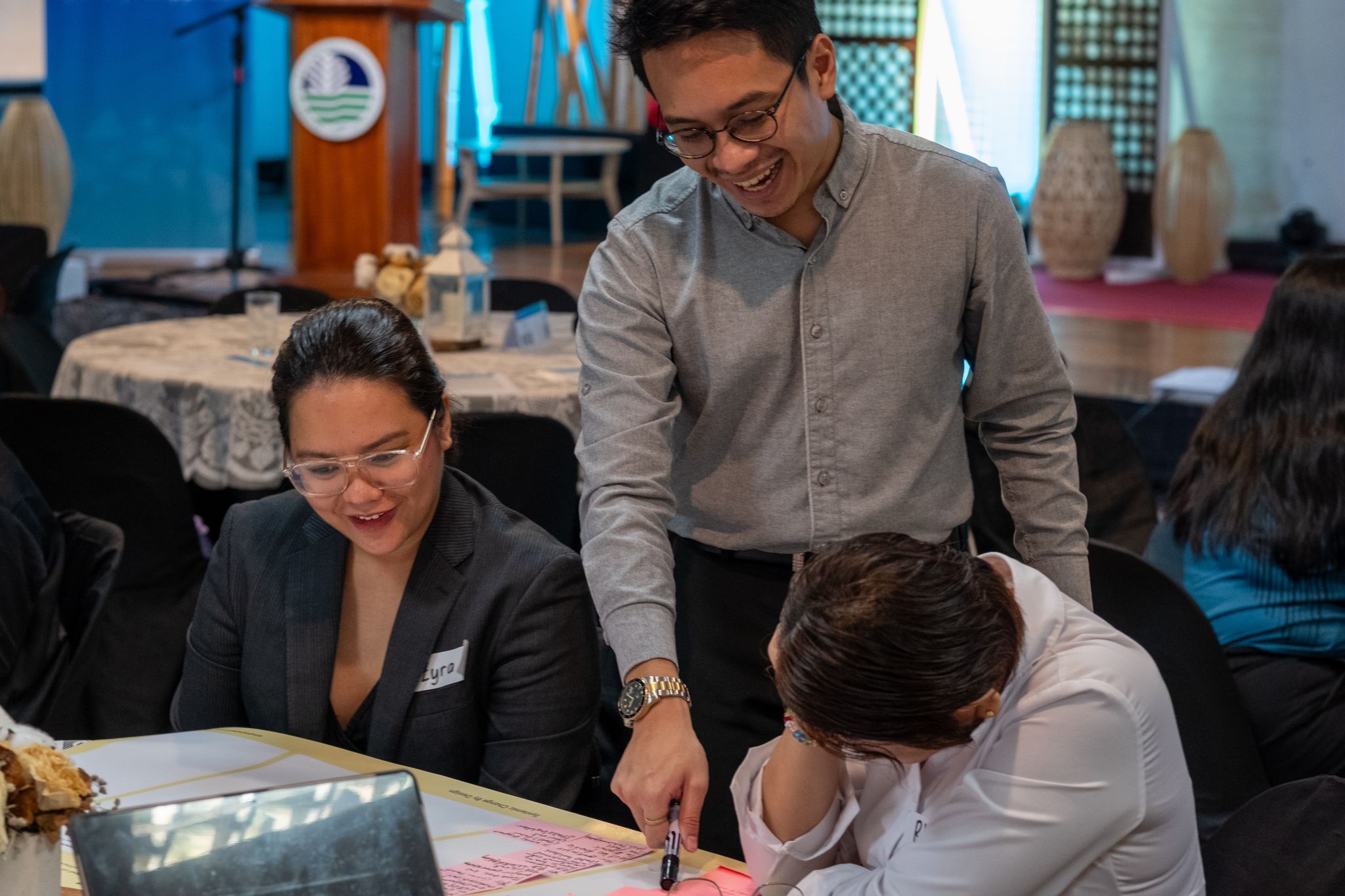
How do you move a platform of government agencies, multinationals, recyclers, informal waste workers, civil society, and development partners from a shared aspiration to shared accountability?
Several compounding tensions defined this engagement:
KindMind approached this engagement through a Braver Governance by Design framework — treating the policy-making process itself as a design problem. The question was not only what the NPAP should produce, but how to produce it in a way that generates genuine ownership, surfaces real disagreement before it becomes political deadlock, and leaves institutions with outputs they can actually use.
Three design principles anchored the work:
Policy does not become real when it is gazetted. It becomes real when the people who must implement it believe they helped write it.
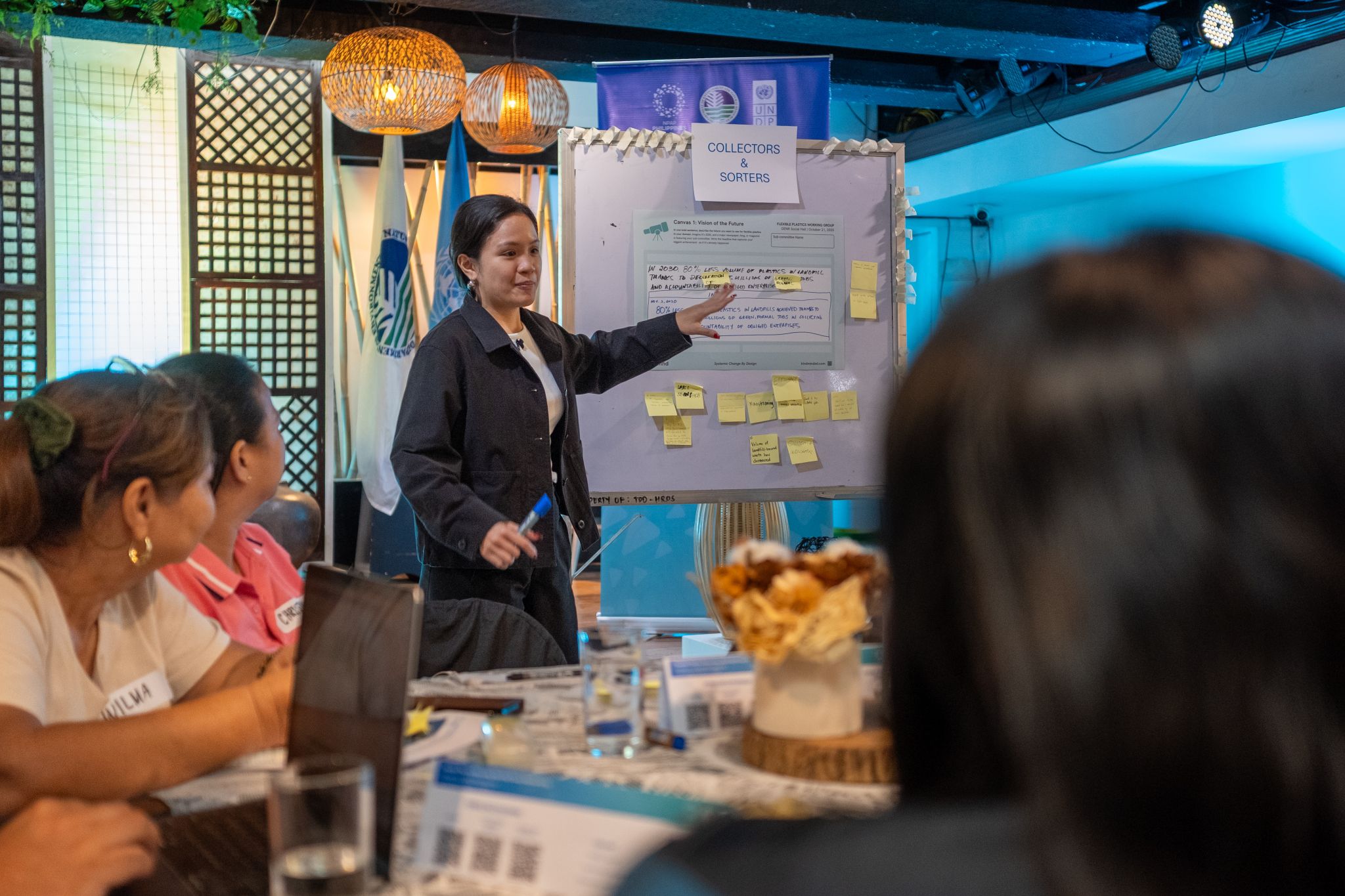
The engagement unfolded across four phases, each building on the last.
Phase 1 — Public Consultation: From Roadmap to Reality (October 2025) KindMind designed and facilitated the NPAP Roadmap public launch — reframed not as a stakeholder briefing but as a co-ownership event. A Gallery Walk during lunch had participants posting green flags (enablers) and red flags (blockers) across all eight action points; deep-dive breakouts produced sector-level positions on each; a Collective Action Wall closed the day with public, cross-sector commitments. The design shifted participants from passive validation to active co-responsibility.
Phase 2 — Flexible Plastics Working Group (October–November 2025) Two workshops moved four sub-committees (PCR Users, PCR Suppliers, Recyclers, Collectors & Sorters) from aspiration to action. Workshop #2 used a Vision–Validation–Prioritisation canvas sequence to produce tiered action plans with named lead organisations. Workshop #3 shifted into coordination mode: sub-committees mapped interdependencies, co-designed a PCR Convening Body, and shaped cross-group prototypes for the following six months.
Phase 3 — Upstream (Reuse & Refill) Working Group (November 2025) KindMind facilitated a Leverage Tree mapping session — surfacing the roots (mindsets), trunk (institutions), branches (rules and incentives), and canopy (visible pilots) of the reuse/refill system. The group then converged on policy gaps and produced structured "To enable reuse and refill, we need..." statements feeding directly into the EPR Implementing Rules and Regulations (IRR) drafting process.
Phase 4 — EPR Accounting Methodologies Co-Creation Workshop (June 2026) The most technically complex session of the series. KindMind designed Dilemma Cards that forced tables to grapple with real accounting scenarios before hearing any framework, then ran an EPR Methodology Canvas simultaneously across three breakout groups (Recycled Content, Reuse/Refill, Redesign). A five-station structure — Baseline, Intervention, Count, Proof, Claim — was held constant across all groups so that differences in outputs reflected real differences in the interventions, not artifacts of facilitation.
A roadmap with real ownership. The October 2025 Public Consultation generated documented commitments across all eight roadmap action points from government, private sector, civil society, and community representatives — closing with a collective public declaration rather than a bureaucratic summary. The design reframed a statutory requirement into an act of shared ownership across the full breadth of NPAP's membership.
From fragmentation to coordination architecture. Across the Flexible Plastics WG series, four sub-committees that had been working in silos produced cross-group action plans, named prototype leads, and co-designed the operating model for a Coordination Secretariat. Seven systemic recommendations emerged covering standards, shared data infrastructure, pilot design, incentives alignment, and Fair Circularity safeguards for informal waste workers.
Clarity over false consensus. The June 2026 EPR workshop's defining output was a structured map of where methodology work must go next — not a premature agreement. "Plastic footprint reduction" turned out to mean three structurally different things depending on the intervention, and no single methodology can serve all three without distortion. The workshop named three specific issues that policy work must now resolve: how to count non-weight reductions, who gets compliance credit across a contested value chain, and how to close the proof gap where reduction is least visible.
Regulatory inputs from the ground up. Across the Upstream WG and the EPR workshop, structured stakeholder positions fed directly into DENR's ongoing IRR drafting process. The work demonstrated that the Philippines already possesses the cultural foundations, working pilots, and sectoral interest for upstream plastic reduction. The barrier is not ambition. It is the absence of enabling systems — and building those systems is now the shared mandate of the room.
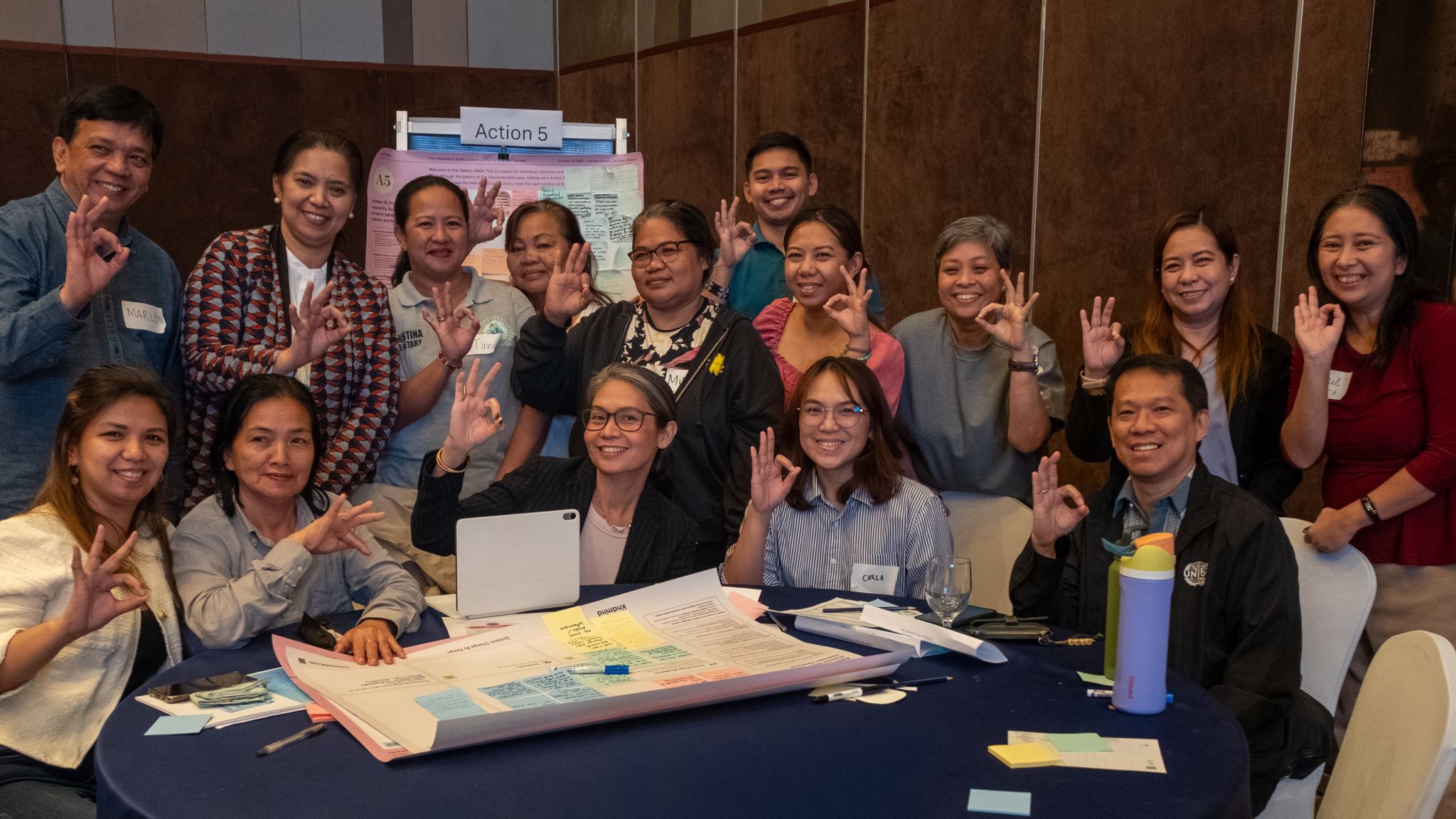
The Philippines' plastics crisis is not a waste management problem alone. It is a production system problem — one that requires coordinated action across the full value chain, from how packaging is designed and manufactured to how it is collected, recovered, and reintegrated into the economy.
NPAP Philippines exists to hold that full system in view. KindMind's work across this engagement demonstrates how participatory, systems-oriented design can turn a platform's ambitions into policy infrastructure: surfacing what needs to be resolved, building the shared language to resolve it, and generating the stakeholder ownership that makes agreements durable rather than contested.
The work is not finished — the coordination body is still being formed, methodologies are still being finalised, and the IRR is still being drafted. But the room now has shared positions, named trade-offs, and a structured set of next steps that no single agency or sector could have produced alone. That is what collective action looks like in practice.
The National Plastics Action Partnership (NPAP) Philippines is a locally driven multi-stakeholder platform launched on 9 March 2025, uniting government, business, civil society, and development organisations to tackle plastic pollution and accelerate the country's transition to a circular economy by 2040. Led by the Department of Environment and Natural Resources (DENR) and hosted by UNDP Philippines, NPAP is part of the World Economic Forum's Global Plastic Action Partnership (GPAP), with support from the Governments of the United Kingdom and Canada and the Coca-Cola Foundation. KindMind serves as the facilitation and experience design partner across NPAP's working group series.


