A civic design experience that uncovers the quiet brilliance hidden in declining public spaces
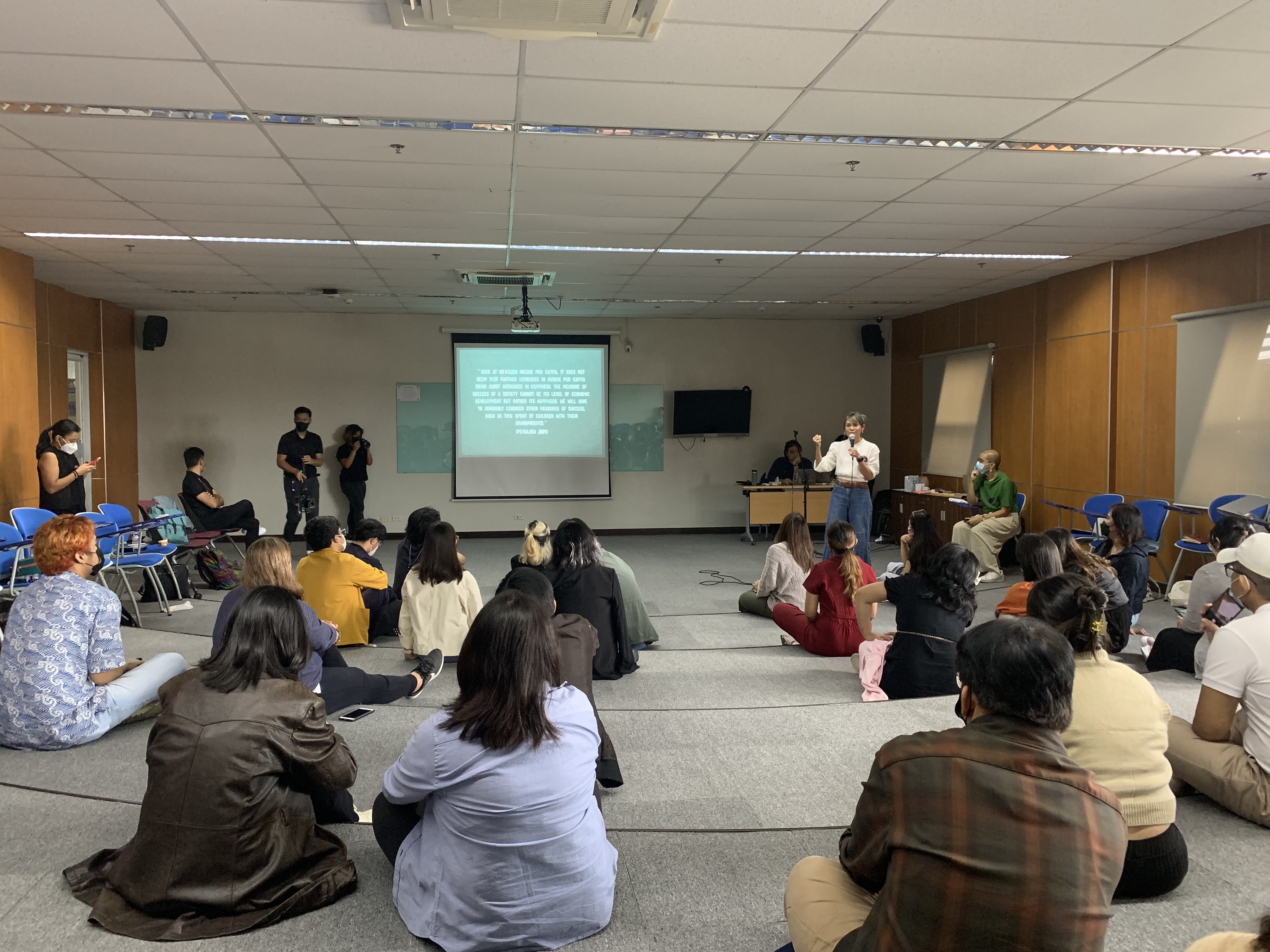
In partnership with the Design Center of the Philippines at the International Design Conference 2022, KindMind guided 50 participants through a learning journey that surfaced the hidden social value and human stories within declining neighborhood commons – equipping them with experience design, systems thinking, and tactical urbanism tools to craft inclusive, community-led place-making visions.
The DTI-Design Center of the Philippines (DCP) hosted the 6th International Design Conference (IDC) in 2022 under the theme “Future for All” – a call to see design not just as aesthetics or function, but as a catalyst for collective flourishing. Within this landscape, DCP partnered with KindMind to run a civic service design workshop aimed at exploring how declining neighborhood commons can be reframed as engines of urban revitalization.
Designers, students, social impact practitioners, and enterprise leaders were invited into a learning experience rooted in observation, meaning-making, and collaboration. At the heart of the workshop was a simple, powerful premise: even the most neglected spaces carry hidden stories of community, value, and possibility.
The Challenge
How might we re-imagine declining neighborhood commons as thriving, healthy, connective community spaces for all?
Urban decline often masks the strengths of a community. Neighborhood commons such as plazas, sidewalks, sari-sari store corners, church fronts, and small parks frequently appear derelict but remain deeply social spaces that hold memory, culture, and informal civic life.
This challenge asked participants to look past decay, resist assumptions, and redesign from a place of empathy and lived experience. It required not just creativity, but a mindset shift: from fixing problems to uncovering strengths.
The KindMind Lens
KindMind approached the challenge with an experience design perspective rooted in care, empathy, and systems thinking. Participants were invited to slow down and see differently – to observe the social dynamics, rituals, and values that quietly animate even the most overlooked neighborhood commons.
The workshop emphasized that meaningful design emerges from lived experiences, not assumptions; that spaces are shaped not only by physical structures but by the emotions, relationships, and cultural patterns of the people who inhabit them. A systems-oriented mindset encouraged participants to consider the broader ecosystem around each space, while a playful, relaxed workshop environment helped unlock creativity and reduce inhibition.
Altogether, the KindMind sprint was an exercise in reframing: shifting focus from what is broken to what is alive, resilient, and worth amplifying within every community.
Guiding Transformation
The workshop followed a learning journey methodology rooted in experience design and sense-making:
Virtual Jane Jacobs Walk - Participants explored a Taft Avenue neighborhood through video – observing movement, behaviors, pain points, and glimpses of joy embedded in the community’s everyday interactions. While virtual, it primed them for deeper empathy and shared understanding.
Introduction to Experience Design (XD) - Many participants knew Human-Centered Design but were new to XD and service design. This created a fresh appetite to understand how experiences, rather than products, shape the way people relate to spaces.
Use of the KindMind Place-Making Toolkit - The toolkit guided participants through: Persona building and clarification of target users Defining specific touchpoints within a neighborhood common Systems prompts to encourage holistic thinking Flaring and narrowing design possibilities Tactical urbanism principles to envision low-cost, high-impact interventions
Collaborative Design Sprint - Grouped participants co-created, debated, imagined, and built narratives around how their chosen neighborhood commons could become more meaningful, inclusive, and alive.
Team Presentations and Reflections - The six groups delivered distinct place-making narratives – each demonstrating how different lenses, values, and lived experiences can shape radically different interpretations of a single shared environment.
The Systemic Impact
The workshop’s outcomes extended beyond producing six unique place-making concepts:
Mindset Shift. Participants began to see derelict spaces as social ecosystems – not problems to be fixed but stories waiting to be surfaced.
New Design Literacy. Experience design and service design frameworks became accessible to a wider audience who had little exposure to these emerging disciplines.
Strengthened Collaboration. Despite being strangers, teams quickly built trust, exchanged perspectives, and embraced playfulness – proving that creativity thrives with psychological safety.
Emerging Civic Imagination. Many participants left more attuned to the civic role of design and more curious about how they could contribute to community-level transformation.
Most importantly, the workshop revealed that community vibrancy never really disappears – it only needs the right lens to become visible again.